 14 Apr, 2024
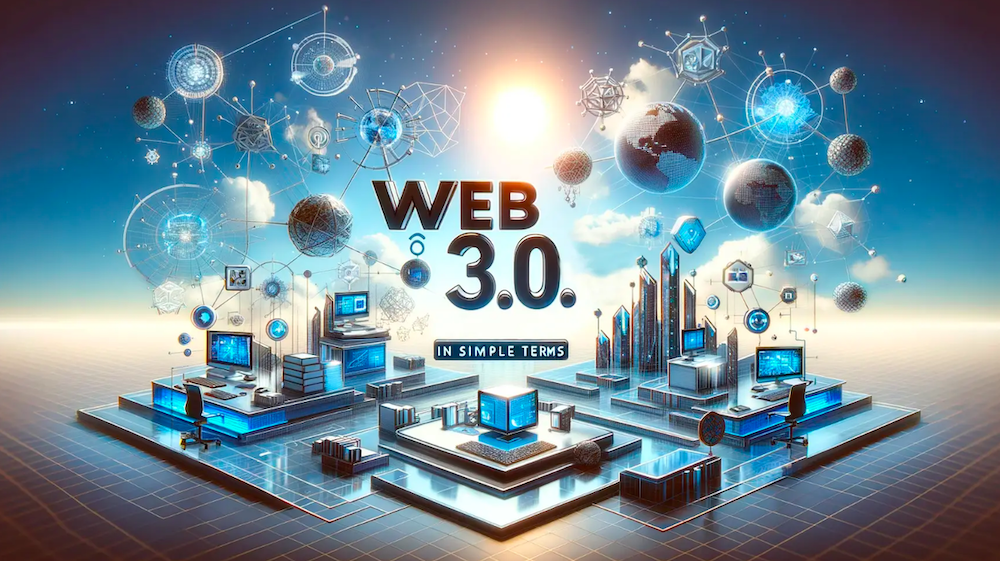
In fact, what we know and call the Internet today was going through radical changes. The first sort of the site, or the Web 1.0, was absolutely static and offered almost no user interaction. The current dominant paradigm, Web 2.0, brought with it more user-interactive and user-centered websites in the form of social media platforms, user-generated content, and cloud-based applications. In the background was Web3.0, described as a decentralized web, which promises to fundamentally change how the world relates to and conducts its financial activities over the internet.
Web3.0 is built on the core principles of decentralization, user ownership, and transparency. This would mean shifting the large and centralized control of big tech companies over our data and online experience. Web3.0 is a network that includes such new advanced technologies as blockchain and cryptocurrencies, among many others, which, in its turn, essentially let users be independent and create a more equal online ecosystem, possibly handing over the management of various aspects of the global economy.
For example, the terms of services formed by centralized platforms in Web 2.0 are formed without the intervention of the users. They take full control of their data and most often even offer a high share of user-generated revenue to the owners. All these paradigms are turned over in Web3.0 through the promotion of decentralization. Instead of putting data on the servers located at the epicenter, in a blockchain, data is placed on distributed ledges. This allows users more control of the information. Essentially, the Web3.0 ecosystem will be fueled by decentralized applications (dApps) that work independently of any single entity. Intermediaries will not be necessary in most dApps dealings. This will, in most cases, provide the end-user with more transparency, security, and control over their environment.
Thirdly, Web3.0 decentralizes the ownership of digital assets. The digital assets include things like digital art and collectibles (popularly referred to as NFTs), in-game assets, or virtual land of the Metaverse. In a fully decentralized environment, users will be able to transact, sell, and resell these assets freely. This will also open up rooms for new ways wherein creators could directly get paid and make money off their work without the intervention of middlemen who, most of the time, end up taking a considerable part of the money. This would work immensely in favor of the artists, musicians, and content creators in various sectors.
The principles of Web3.0 hold vast potential for reshaping various aspects of the global economy:
Though promising, Web3.0 also carries some of the risks and downsides along, which should be mitigated to arrive at mainstream success.
A decentralized web holds the promise to change the very paradigm of our relationships over the internet. Building on the basics of user ownership, decentralization, and transparency from Web3.0, there comes a cocktail of emerging technologies to give its functionalities more power and open new possibilities. Let’s meet some of these key players in this landscape, which is never set in stone:
Metaverse: A general name defining a network of linked 3D virtual worlds where avatars live, work, socialize, and play games. The Metaverse presents a place of shared activity through various means, be it for game or business activities. The Metaverse is underlined by the principles of Web3.0, fueled with blockchain and NFTs backing the property and ownership of virtual property and those experiences. Starting from virtual concerts and up to being able to own a piece of virtual land and conduct business meetings in the Metaverse, there are many possibilities—it’s breathtaking.
Applications: Gaming, social interaction, education, virtual workspaces, e-commerce. Non-fungible tokens (NFTs) are special digital tokens that represent proof of ownership towards digital or real world-based assets. Every NFT is unique and cannot be replicated, hence valuable to use for digital collectibles, art, in-game items, and even virtual land in the Metaverse. NFTs use blockchain technology to accord the holders of such tokens the proof of ownership. The areas of application are several and comprise everything from digital art and collectibles to in-game items, virtual land ownership, ticketing at any scale of events, and even fractional ownership of real-world assets.
Decentralized Autonomous Organizations (DAOs): These are the web-native groups of people sharing common interests. Decisions on how DAOs will act are held by token holders according to well-defined rules. DAOs can be put to use in various sectors—raising venture capital, running social media platforms, or organizing artistic projects. Use cases include but are definitely not limited to community governance, venture capital funding, and even social media platforms, such as artistic collaboration and joint ownership of common assets by a group of people.
Decentralized Finance (DeFi): DeFi, you can regard it as a full set of financial applications based on blockchain technology. DeFi thus allows borrowing, lending, trading, or even investing between users directly, i.e., without the requirement of going through some sort of middle person from traditional finances, including banks. DeFi applications take accessibility to the next level from traditional financial systems and may come with even lower fees. Some examples of applications are lending and borrowing, crypto trading, asset management, decentralized exchanges (DEXs).
InterPlanetary File System (IPFS): IPFS is a decentralized storage network used for storing and accessing data. Data spreads across a computer network, a sharp contrast with the use of data centers in storing data through traditional cloud storage, hence strengthening the resistance network and the integrity of the data. IPFS makes secure and censor-resistant storage of data and assets possible. More applications of IPFS include decentralized web hosting, storage of dApps data, content distribution networks (CDNs), and, of course, censorship-resilient file sharing.
Decentralized Identity (DID): DID represents a new way of dealing with digital identity management. In the traditional system, identification has been based on the control and rules of a centralized identity. This new form of decentralized identity allows the control to be put into the hands of its. Users will have control over the DIDs that they share with applications, improving the privacy and security of users on the internet by sharing a specific data point need-to-know basis. Secure logins for dApps, self-sovereign identity management, data privacy control, and protection of online reputation.
WebAssembly (WASM): It is a low-level assembly language meant to run with web browsers. The high level of performance of the dApps can be effectively run even on weak devices with a web browser. This gives access to work with much more complex and interactive Web3.0 applications. Applications: High-performance dApps, complex games, decentralized applications with rich user interfaces.
These, among other emerging technologies and those still under development, are dynamizing and enhancing the potential of Web3.0. And as they continue to evolve, weaving even more tightly with each other, a more generalist, user-friendly, and even empowering experience on the decentralized web is likely. From virtual worlds within the Metaverse to revolutionary financial products and services with DeFi, Web3.0 could truly change everything over the upcoming years.
It’s predicted to be a very slow transition to Web3.0, but the potential impacts on the global economy are at an arm’s length in the foreseeable future. The courses of action for businesses, governments, and people are:
Web 3.0 poses a potential paradigm shift towards a much more decentralized, user-centered, and collaboratively ordered online ecosystem. While a few challenges still exist, the kind of potential it brings to the global economy is something that the world cannot afford to avoid. This would, therefore, create a global economic landscape that is fairer and better, as it allows users, produces transparency, and increases innovation. But at the same time, taking care of the scalability issues, security layers, ensuring clear regulations, and bridging the digital divide will be vital in smoothly sailing through this transformation. Therefore, a great collaboration between the individual, the company, and the policy-maker needs to be done to define the future of Web 3.0, leveraging its powers for the benefits of all the stakeholders.