 1 Apr, 2024
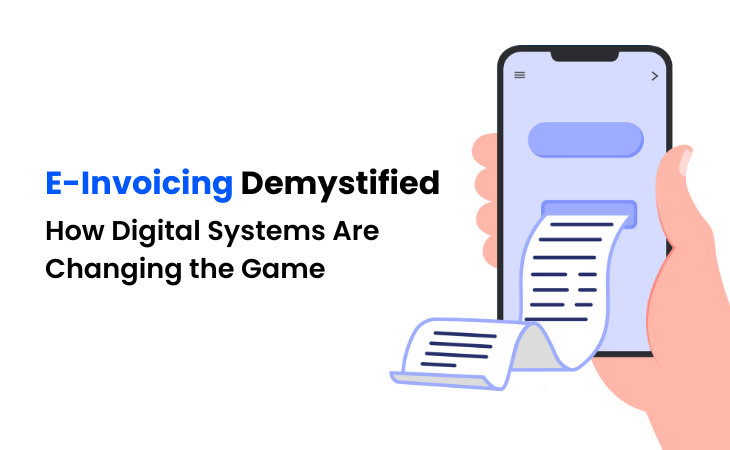
In the era of digitalization, the Indian government’s push for a paperless tax ecosystem has significantly impacted businesses, particularly in the realm of GST (Goods and Services Tax) compliance. One key initiative in this direction is the introduction of e-invoicing, a revolutionary step that transforms the traditional paper-based invoicing system into a streamlined, digital powerhouse. This comprehensive guide delves into the intricacies of e-invoicing under GST, offering valuable insights for businesses of all sizes to navigate this new landscape smoothly.
E-invoicing, or electronic invoicing, refers to the process of issuing and receiving invoices electronically in a standard format prescribed by the government. These invoices are authenticated by a designated authority, the Invoice Registration Portal (IRP), which generates a unique Identification Reference Number (IRN) for each invoice. This IRN acts as proof of invoice generation, aids in faster tax return filing, and helps prevent tax evasion.
The applicability of e-invoicing depends on the aggregate turnover of a business in the preceding financial year. As of April 1, 2024, all businesses registered under GST with a turnover exceeding Rs. 5 crore are mandated to generate e-invoices for all their B2B (business-to-business) transactions and exports. This threshold has been gradually lowered from the initial Rs. 100 crore limit set at the introduction of e-invoicing, demonstrating the government’s commitment to wider adoption.
E-invoicing isn’t just about replacing paper with pixels; it offers a multitude of benefits for businesses:
Enhanced Efficiency: Manual invoice processing is time-consuming and error-prone. E-invoicing automates data entry, eliminates physical storage needs, and facilitates faster invoice reconciliation, leading to increased efficiency and reduced operational costs.
Improved Accuracy: Electronic data exchange minimizes manual data entry errors, ensuring accurate GST calculations and filing. This reduces the risk of potential penalties associated with incorrect tax calculations.
Real-time Tracking: Businesses can track the status of their invoices in real-time, providing greater transparency into cash flow and enabling them to make informed business decisions.
Simplified Record-keeping: E-invoices are stored electronically, eliminating the need for bulky paper archives. This improves accessibility and simplifies retrieval of past invoices for audit purposes.
Reduced Environmental Impact: E-invoicing significantly reduces paper consumption, making it a more environmentally friendly alternative to traditional invoicing methods, aligning with the growing focus on sustainability.
Streamlined GST Compliance: E-invoices pre-populate data for GST return filing, simplifying the process and saving valuable time.
There are three primary methods for generating e-invoices under GST, catering to various business needs and technical expertise:
1. Government-managed Invoice Registration Portal (IRP): Businesses can utilize the IRP, a free online portal offered by the government, to generate e-invoices.
Benefits: User-friendly interface, no additional software costs.
Considerations: May require familiarity with the platform and increased manual data entry, potentially impacting efficiency for larger businesses.
2. GST Suvidha Provider (GSP): Businesses can outsource e-invoicing tasks to a GST Suvidha Provider, a GST-authorized intermediary. GSPs provide e-invoicing software and facilitate integration with accounting systems, offering a more comprehensive solution.
Benefits: Specialized support, integration with existing software, efficient management of large invoice volumes.
Considerations: Additional subscription fees associated with GSP services.
3. Accounting Software with E-invoicing Feature: Several accounting software programs now offer built-in e-invoicing functionalities, allowing businesses to generate e-invoices directly within their existing software.
Benefits: Seamless integration with existing financial data, simplified workflow for businesses already using such software.
Considerations: Compatibility with specific accounting software, potential for additional costs depending on the software plan.
The ideal e-invoicing solution depends on several factors, including:
Business Size and Volume of Transactions: Larger businesses with high transaction volumes may benefit from the efficiency and integration offered by GSPs or accounting software with e-invoicing features.
Technical Expertise: If a business has limited technical expertise, the user-friendly IRP may be sufficient. However, businesses requiring advanced functionalities may prefer GSP or accounting software integration.
Budget: Cost considerations are crucial. The IRP is free to use, while GSPs and accounting software with e-invoicing features typically involve subscription fees. Businesses need to weigh the cost against the efficiency gains and additional functionalities offered by each option.
Once a business has selected its preferred e-invoicing solution, here’s a step-by-step guide to implementation:
Register with the GST portal: Ensure your business is registered on the GST portal and has a valid GST Identification Number (GSTIN).
Choose your e-invoicing method: Select the most suitable method – IRP, GSP, or accounting software with e-invoicing – based on your business needs.
Configure your chosen solution: If using the IRP, familiarize yourself with the platform. For GSPs or accounting software, follow the setup instructions provided by the service provider.
Update product and service information: Ensure your product and service details in your chosen e-invoicing solution are accurate and up-to-date for proper invoice generation.
Integrate with your accounting system (optional): If using a GSP or accounting software with e-invoicing, integrate it with your existing accounting system for seamless data flow.
Test and Train: Before deploying the system for live transactions, thoroughly test its functionality and provide training to relevant staff on e-invoice generation and management.
Timeline for E-invoice Generation: E-invoices need to be generated within a specified timeframe, although the current timeframe is not strictly defined for businesses below Rs. 100 crore turnover (as of April 1, 2024). It’s generally recommended to generate e-invoices on or after the invoice date but before filing GSTR-1 returns (tax return for outward supplies) for better record-keeping.
E-invoice Cancellation: E-invoices can be cancelled within a specific timeframe (usually 24 hours), but partial cancellation is not permitted. Businesses should have clear internal policies and procedures for e-invoice cancellation to avoid errors and penalties.
E-invoice Retention: Businesses are required to retain e-invoices for a prescribed period (as per GST law) for audit purposes. Implementing a robust e-invoice storage solution is crucial.
Data Security: E-invoices contain sensitive information. Businesses must prioritize data security measures to protect e-invoices from unauthorized access.
Staying Informed: The government may update e-invoicing regulations periodically. Businesses should subscribe to official GST portal notifications and stay updated on any changes.
E-invoicing offers much more than just compliance benefits. Businesses can leverage this digital transformation to gain a competitive edge:
Improved Supply Chain Management: Real-time invoice tracking improves visibility into inventory levels and facilitates better coordination with suppliers.
Enhanced Customer Experience: Faster invoice processing and delivery lead to quicker payments and improved customer satisfaction.
Data-driven Insights: E-invoices provide valuable data for analyzing sales trends, customer behavior, and identifying areas for improvement.
Reduced Operational Costs: Long-term, e-invoicing can potentially lead to significant cost savings through reduced paperwork, improved efficiency, and easier tax filing.
E-invoicing represents a significant leap forward in the Indian tax ecosystem. By embracing this digital transformation, businesses can not only ensure GST compliance but also unlock a multitude of benefits. From increased efficiency and improved data-driven decision making to enhanced customer service and reduced operational costs, e-invoicing empowers businesses to streamline operations and pave the way for future growth. As the e-invoicing system continues to evolve, businesses that adapt early stand to gain a significant competitive advantage. This comprehensive guide has equipped you with the knowledge and resources necessary to embark on this smoother GST journey with e-invoicing as your digital powerhouse.