 21 Sep, 2023
In the rapidly shifting landscape of global commerce, the burgeoning economic synergy between India and Malaysia stands as a testament to the power of strategic bilateral cooperation. Recent initiatives, most notably the Malaysian Franchise Programme in Bengaluru, have underscored a new chapter in this relationship—one characterized by a shift from traditional trade to dynamic, people-to-people business ecosystems. As both nations navigate a post-pandemic global economy, the focus has sharpened on fostering entrepreneurship, cross-border franchising, and the digital integration of SMEs, creating a roadmap for a resilient and prosperous future.
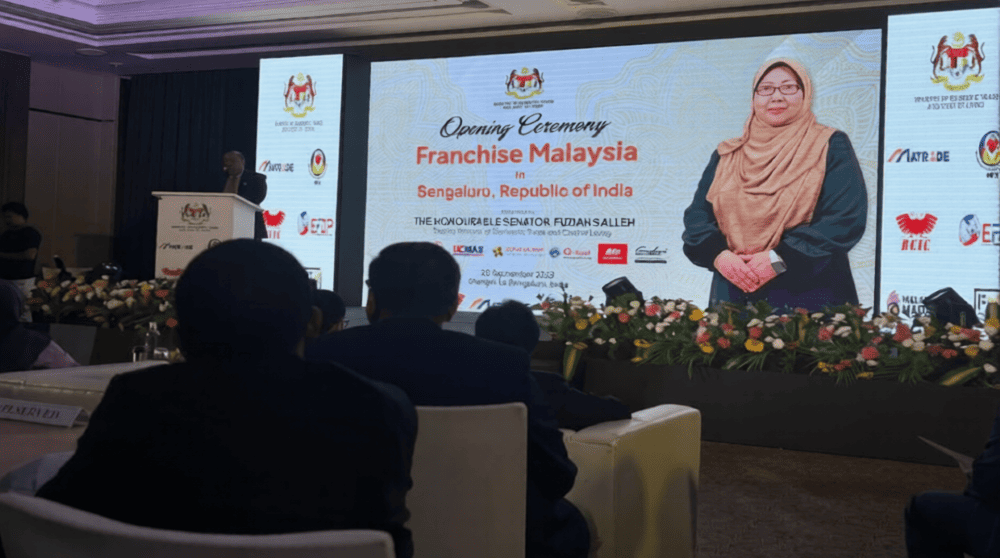
The recent trade mission to Bengaluru, led by Malaysia’s Deputy Minister of Domestic Trade and Cost of Living, Senator Fuziah Salleh, serves as a focal point for understanding this evolving partnership. Organized in collaboration with the Bangalore Chamber of Industry and Commerce (BCIC), the mission was not merely a ceremonial event but a targeted strategic intervention designed to facilitate high-level business integration.
Bengaluru, often hailed as India’s Silicon Valley and a burgeoning hub for retail and service innovation, provided an ideal backdrop for this engagement. The event succeeded in drawing the interest of over 100 local Indian investors and entrepreneurs, signaling a robust appetite for Malaysian service models. The delegation featured a diverse array of Malaysian brands—namely ALOHA, Little Caliphs, Marrybrown, Q-Dees, Sangkaya, Smart Reader Kids, and UCMAS. These brands, spanning education, food and beverage (F&B), and childcare, represent the strengths of the Malaysian service sector—a sector that is increasingly focused on high-quality, scalable business models.
The goal of this mission was twofold: to introduce established Malaysian franchises to the massive, diverse, and rapidly expanding Indian consumer market, and to create an avenue for Indian franchise brands to enter the Malaysian ecosystem. This reciprocity is critical. It transforms the relationship from a unidirectional export model into a collaborative growth strategy, where both nations view each other as partners in innovation and market expansion.
For decades, the India-Malaysia trade relationship was primarily defined by commodities—palm oil, electronics, and manufacturing components. However, the contemporary focus, as evidenced by the high-level dialogues in Bengaluru, is shifting toward the tertiary sector.
In 2022, India was identified as Malaysia's largest trading partner among the eight South Asian nations, with a substantial portfolio of approved investments in the manufacturing sector. These investments are projected to create over 27,000 job opportunities, illustrating the tangible socioeconomic impact of this partnership. Yet, the current administration in Malaysia, under the guidance of the Ministry of Domestic Trade and Cost of Living (KPDN), is keen to look beyond manufacturing.
The emphasis on franchising is strategic. Franchising offers a proven model for rapid market entry and scale, particularly for Small and Medium Enterprises (SMEs). For a developing economy like India, the influx of Malaysian franchise systems—which emphasize standardized operational protocols, staff training, and quality control—can accelerate the maturation of the local retail and service landscape. Conversely, for Malaysia, India offers a market of unparalleled scale. With the world’s largest population and a burgeoning middle class, India presents a consumer base that is increasingly discerning and willing to pay for branded, consistent service experiences.
The choice of Karnataka as the launchpad for this mission was deliberate. As a key economic engine of India, Karnataka’s business-friendly policies and vibrant startup ecosystem make it a natural gateway for international firms. During the trade mission, discussions between Malaysian representatives and the Karnataka state government, specifically the Minister of Food, Supplies and Consumerism, K.H. Muniyappa, highlighted a mutual interest in creating seamless pathways for cross-border investments.
Moreover, the engagement with corporate giants like Reliance Industries reflects a broader ambition to integrate Malaysian franchises into the existing retail infrastructure of India. This level of corporate-government synergy is essential for overcoming the regulatory and logistical hurdles that typically inhibit international market entry.
One of the most promising developments discussed during the mission is the potential for diversifying payment mechanisms. The mention of the Reserve Bank of India’s (RBI) policy allowing trade in Indian Rupees (INR) against the US Dollar within the ASEAN region is a game-changer. By bypassing the necessity for the US Dollar in bilateral transactions, Indian and Malaysian businesses can significantly reduce currency conversion costs and mitigate exchange rate volatility.
This monetary shift, combined with a collective push toward digitalization, is expected to lower the barriers to entry for SMEs. As both nations modernize their digital economies, the scope for collaboration in e-commerce, Internet of Things (IoT), and fintech has expanded. As BCIC President Dr. S. Devarajan rightly noted, the collaboration in the startup and digital space is not just an opportunity; it is an imperative for maintaining competitiveness in the Asian Century.
Despite the optimism, the path to seamless integration is not without challenges. Cultural nuances, regulatory differences in consumer protection laws, and the intensely competitive nature of the Indian retail market require a nuanced approach. Malaysian brands must be prepared to adapt their offerings to suit local Indian tastes, regional preferences, and price points.
The Malaysian government’s proactive stance—introducing initiatives to make franchising more affordable, such as programs geared toward empowering housewives and small-scale entrepreneurs—is a model that could be mirrored in India. By focusing on democratizing entrepreneurship, both countries can ensure that the benefits of the trade partnership are distributed across the economic spectrum, rather than being confined to large corporations.
The vision articulated by officials on both sides is clear: Malaysia aims to improve its standing as a trading partner for India, moving beyond its current position to become a foundational pillar of India’s engagement with Southeast Asia. This is a mutually beneficial ambition. Malaysia, as a gateway to the ASEAN region, offers India a strategic foothold in a market of over 600 million people. Simultaneously, India offers Malaysia a scale of market access that is unparalleled.
As we look toward the future, the integration of these two economies is likely to deepen in three key areas:
Service Sector Expansion: Continued growth in educational, F&B, and healthcare franchises, leveraging the demographic dividend of India.
Digital Integration: Utilizing shared digital infrastructure to facilitate smoother trade and regulatory compliance.
Policy Alignment: Further harmonization of trade policies to ensure that the "ease of doing business" is a reality for the average entrepreneur, not just multinational corporations.

The resurgence of the India-Malaysia trade partnership, characterized by the dynamism of the Malaysian Franchise Programme, marks a pivotal shift in bilateral relations. By focusing on the franchise model, both nations are tapping into a powerful engine for economic growth, employment, and innovation.
The success of the mission in Bengaluru is not merely a statistical achievement; it is a signal of intent. It demonstrates that the future of India-Malaysia relations lies in the hands of the entrepreneurs, the investors, and the innovators who are ready to look beyond borders. As both nations continue to dialogue, adapt, and collaborate, they are not just strengthening their economies; they are actively shaping the narrative of the Asian Century—a narrative defined by partnership, prosperity, and shared progress. The bridge between Kuala Lumpur and Bengaluru is now firmly established, and the traffic across it promises to be both frequent and transformative.